Grocery Price Book App: Track Prices and Save Money on Every Shop
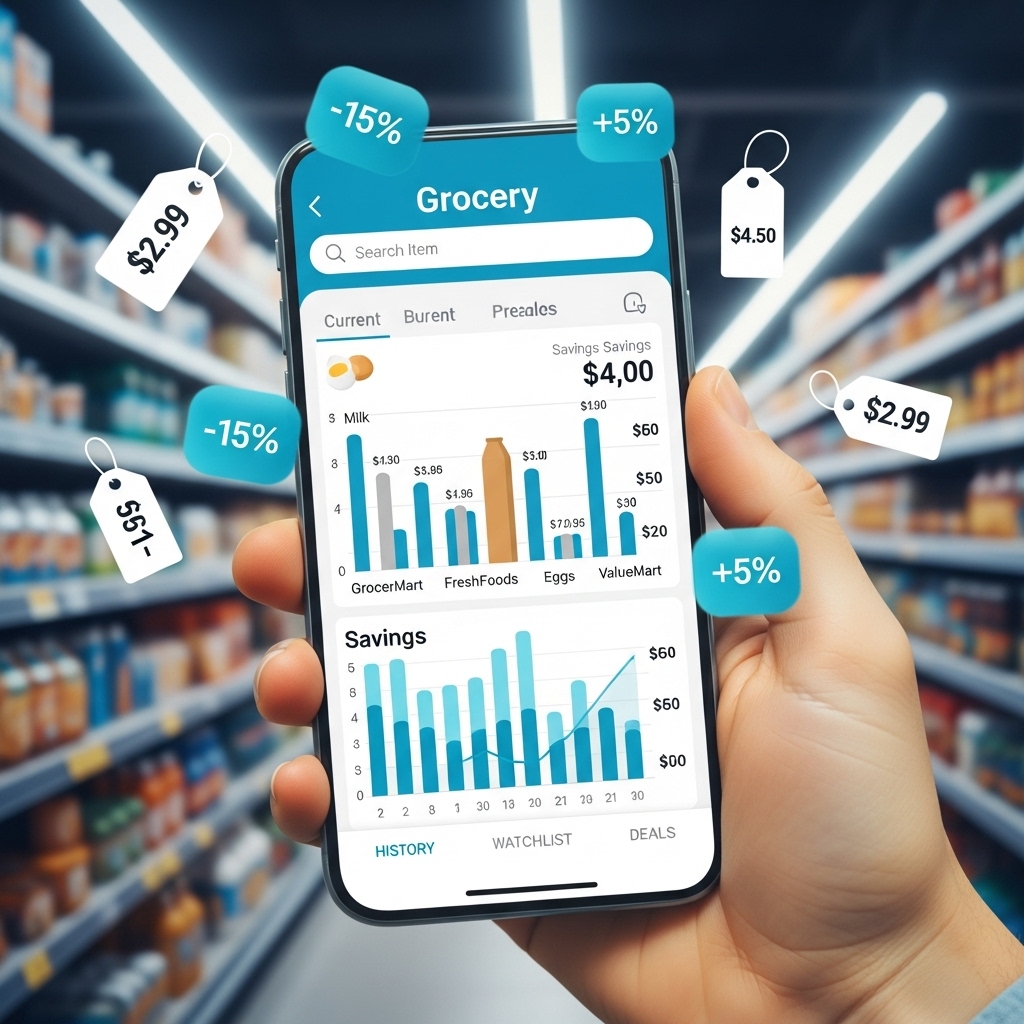
Milk was $3.49 last week. This week it is $4.29. Or was it $3.99? You cannot remember. So you buy it anyway because you need milk.
This is how grocery stores win. They count on you not knowing what things actually cost. They raise prices slowly. You do not notice. You keep paying.
A grocery price book changes the game. You track prices. You know what things cost. You know when you are getting a deal and when you are getting ripped off.
What is a Grocery Price Book?
A grocery price book is exactly what it sounds like. A record of what you pay for groceries. Item by item. Store by store. Week by week.
You write down the price of milk at Store A. The price of bread at Store B. The price of chicken at Store C. Over time you build a database of prices.
Then when you shop you know. Is $3.99 for chicken a good price? Check your price book. Your lowest recorded price is $3.49. So no. Not a good deal. Wait for a sale.
Why You Need a Grocery Price Book App
You could do this with pen and paper. People did for decades. But a grocery price book app is faster. Easier. More powerful.
Instant Price Lookup
You are in the store. Chicken is on sale. Is it actually a good price? Pull out your phone. Check your app. Know in seconds.
With paper you would need to carry a notebook. Flip through pages. Squint at your handwriting. By then you have lost your place in line.
Automatic Tracking
A good grocery price book app learns from your shopping. You buy milk. It records the price. You buy it again next week. It compares. It shows you the trend.
No manual entry. No forgetting to write things down. It just works.
Multi-Store Comparison
Which store has the best price on eggs? Your app knows. It tracks prices across all the stores you shop at. It tells you where to buy what.
Maybe Store A has cheap produce but expensive meat. Store B is the opposite. Your app helps you shop strategically.
How Much Money Can You Actually Save?
Let's do real math. Say you buy 30 items per week. If you save just 50 cents per item by knowing prices and waiting for deals, that is $15 per week.
$15 per week is $780 per year. Just from being smarter about prices. No coupons. No extreme measures. Just knowledge.
Combine this with our strategies to reduce your grocery bill and you could save over $1000 per year.
How to Use a Grocery Price Book App
Step 1: Track Your Staples
Do not try to track every item. Focus on the things you buy regularly. Milk. Eggs. Bread. Chicken. Rice. Pasta. Coffee.
These are your staples. The items you buy every week or every month. These are where price tracking matters most.
Step 2: Record Prices as You Shop
When you buy something note the price. Most grocery price book apps make this easy. Scan the receipt. Or quick add while you shop.
Do this consistently for a month. You will start to see patterns. You will learn the price cycles.
Step 3: Stock Up on Real Deals
Once you know prices you can spot real sales. Chicken usually $4.99 per pound? It is on sale for $2.99? Buy extra. Freeze it.
This is how you beat inflation. You buy when prices are low. You skip when prices are high. Your grocery price book app tells you which is which.
Integration with Meal Planning
A grocery price book is most powerful when combined with meal planning. Here is how it works:
- Check your price book for what is on sale
- Plan meals around those sale items
- Only buy what you need for those meals
- Save money without sacrificing variety
EpuloWeek combines price tracking with meal planning and pantry management. Everything in one place. No switching between apps.
Common Mistakes to Avoid
Tracking Too Many Items
You do not need to track every single thing. Focus on high-frequency, high-cost items. The things that actually impact your budget.
Forgetting to Update
Prices change. Your price book needs to stay current. If you only update it once a month it loses value. Update as you shop.
Ignoring Unit Prices
Always track unit prices not package prices. A 16oz package for $4 is different from a 12oz package for $4. Track price per ounce or per pound.
Beyond Just Prices
A good grocery price book app does more than track prices. It helps you:
- Identify price cycles (when to buy)
- Compare stores (where to shop)
- Plan meals (what to cook)
- Track pantry (what you have)
- Generate lists (what to buy)
The Pantry Connection
Your grocery price book works best with pantry tracking. When you know what you have and what it costs you make smarter decisions.
You see chicken on sale. You check your pantry. You already have three pounds in the freezer. You skip the sale. You do not overbuy.
Read our pantry inventory tracker guide to learn how to set this up.
Real World Example
Sarah tracks prices for her family of four. She discovered that Store A has the best produce prices but Store B beats them on meat and dairy.
She now shops at Store A weekly for produce. She hits Store B once a month for meat sales and stocks her freezer. She saves $200 per month.
The time investment? Five minutes per week updating her price book. The return? $2400 per year.
Start Simple
Do not overcomplicate this. Start with ten items. The ten things you buy most often. Track those for a month.
You will learn the system. You will see the savings. Then you can expand.
Check out our $50/week challenge to see how price tracking fits into a complete budget strategy.
Ready to stop overpaying for groceries? Download EpuloWeek and start tracking prices today. Your wallet will thank you.